

Set a direction before choosing the furniture.
Help your client explore a furnishing direction for an empty home using saved references and the room’s fixed features. Develop a visual starting point, then review the options against how the room will be used.
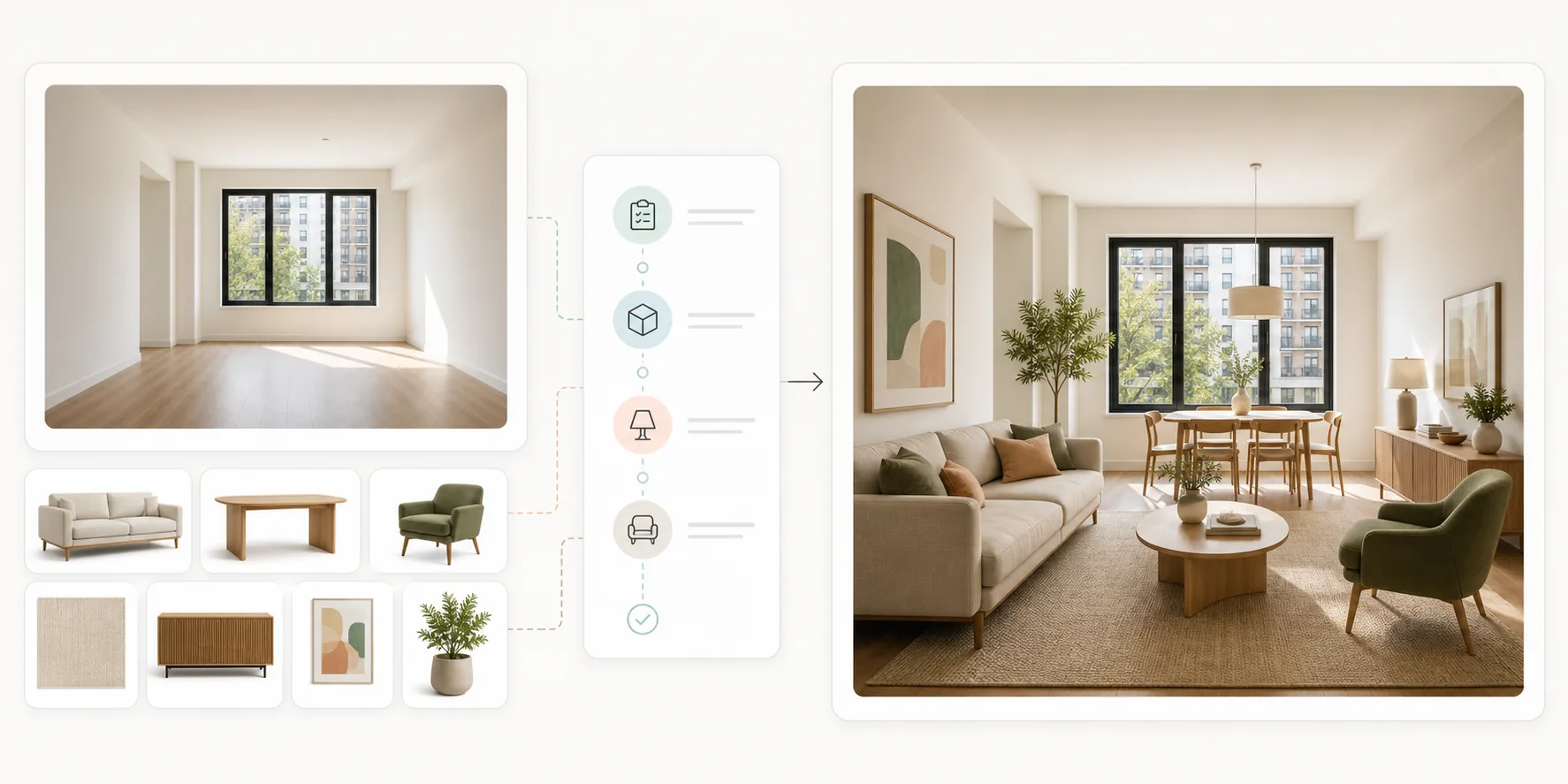
An empty home still has a starting point.
Begin with how the client wants to live, what they like in their references and what the already-built room fixes.
The room may be unfurnished, but its size, windows, floor and circulation already shape the choices. Ask which qualities matter in the saved images: the palette, the furniture arrangement, the materials or the feeling of the space.
This sequence is for professionals helping a client furnish a home. If it is your own home, use these questions to prepare a brief with your designer or furnishing adviser.
Separate the direction from the shopping list.
A product choice is hard to assess when the client is still deciding what the room should feel like.
A sofa can suit one reference and conflict with another. Before comparing individual pieces, make the competing preferences explicit. Agree which qualities to explore first, while keeping the budget and room constraints in the brief.
Start with one room and a clear question.
Use a room that can help the client assess the direction before extending it to other spaces.
Clarify the references.
Record what the client wants to carry into the room and what they want to avoid. Include the fixed features and practical requirements.
Review a first direction.
Prepare a visual option and check it against the brief and room information. Ask which qualities the client wants to keep or change.
Compare the furnishing choices.
Use the agreed references when reviewing candidate pieces. Check each room and product separately; a shared direction does not establish fit.
Use Studio to prepare a direction for review.
The consultation workflow explains the starting material, visual task and checks before sharing with the client.
Studio assists the visual work; you decide whether the result represents the brief. Good enough to show a client, decide a direction, and choose between options; not accurate enough to approve a finish, match a colour, or build from. Check room dimensions and clearances independently, inspect physical samples for colour and finish, and confirm product details with the supplier.
Give the client something specific to respond to.
Ask about the qualities of the room, before asking them to select every item.
Instead of comparing unrelated inspiration images, review one room option against the stated preferences. A response such as “keep the warm palette, change the seating” gives the next revision a clearer purpose.
Keep the basis for later choices visible.
Use the brief, reviewed visual and client response when developing the next room or recommendation.
The value to your practice is a record of why the direction was chosen. When a new furnishing option comes up, you can compare it with that record and identify what needs another client decision.
Explore the direction workflow.
Start with consultation to visual direction if the client’s preferences still need resolving.
If the direction is already agreed and the question is about a particular furniture piece or finish, move to product and material consultation. The workflow pages explain what to prepare and what to check.